
Women's Rugby World Cup 2029: sponsor activations in Australia
Australia will host the 2029 Women's Rugby World Cup, and the sponsors weighing it up now are asking a practical question: what goes in the fan zone that people actually keep? The 2025 tournament in England was the biggest women's rugby event so far, with England beating Canada in the final and New Zealand third, and it showed how fast this audience turns up and shares. Four years out, there is real time to plan an activation that reaches a young, engaged crowd before the space fills up.
Why Australia in 2029 is a distinctive stage
Australia arrives at 2029 having just hosted the men's Rugby World Cup in 2027, the first country to run the men's and women's tournaments in successive editions. That means two years of rugby attention landing on the same host nation, a home crowd already warmed up, and travel patterns that fans will have learned the first time round. For a brand, the draw is the fan base rather than the fixture list. Women's rugby is one of the fastest-growing parts of the sport, and its followers skew young, highly engaged and active on social. Reaching them early, before the tournament is crowded with sponsor messages, is worth more than a louder presence in the final weeks.
The activation: a fan in their nation's jersey
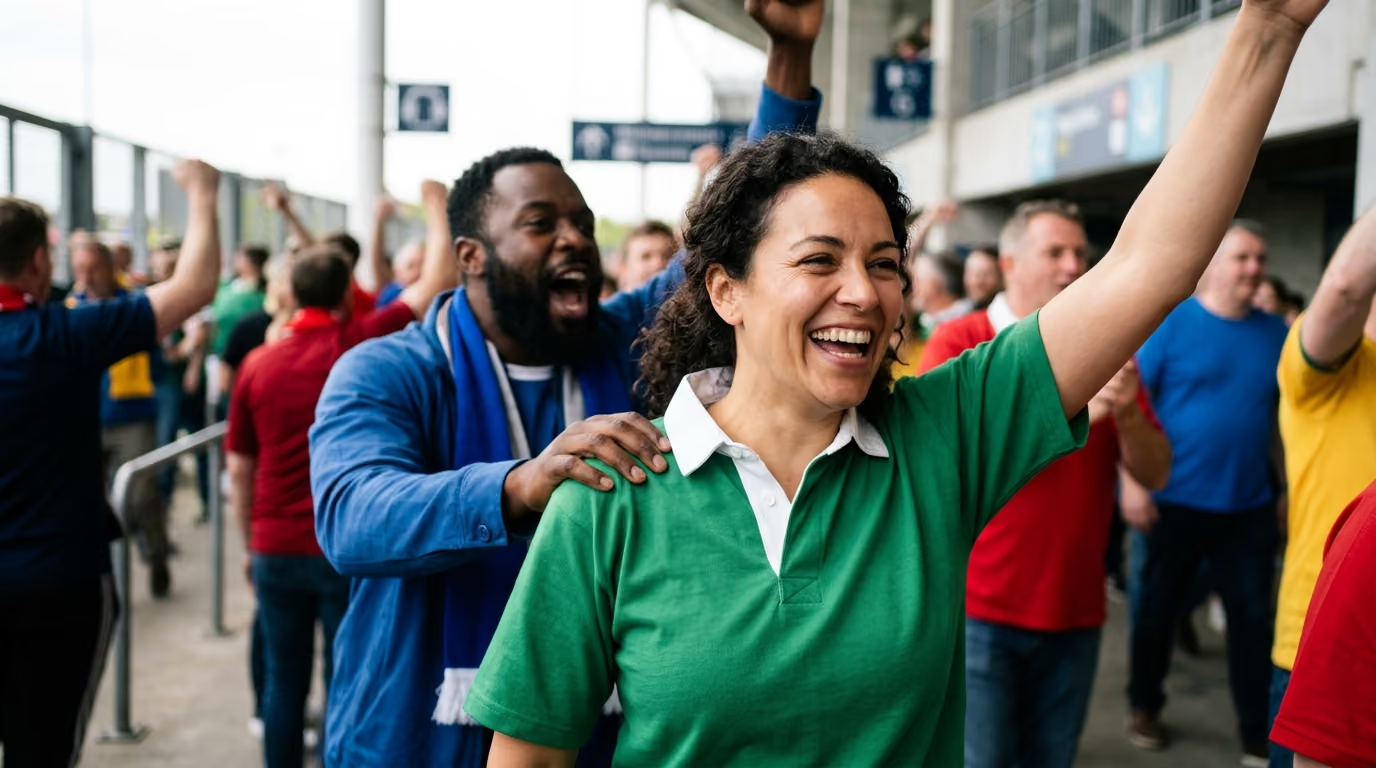
Here is the core idea. A guest steps up to a booth in the fan zone, has their photo taken, and in under two minutes walks away with a one-of-one collectible that places them in their nation's jersey, styled for the tournament. Green and gold for the home side, the red rose of England, the black of New Zealand: the guest picks a side and sees themselves in it. The sponsor's branding sits inside the design at print quality, rendered cleanly rather than stuck on afterwards, so the logo reads as well on the printed card as it does on screen. Each collectible is built to be shared, which is where a young, social crowd does the amplification for you.
We have run this pattern for partners before. For Lenovo, a FIFA partner, we printed and delivered 800+ personalised cards in four hours at a London activation, three themes each in a hardcover display case. At the Formula 1 Grand Prix in Austin and Mexico City, a Paramount+ activation generated 6,522 unique AI portraits, with demand in Austin strong enough that it was extended to Mexico City the following weekend. The rugby version uses the same machinery: high-throughput booths, on-site generation, brand-safe output.
.jpg)
Delivering it reliably across a national tournament
A World Cup is not one site. It is a run of match days across host cities, and the output has to look identical wherever a guest happens to be. That is a delivery problem before it is a creative one. Staffed kiosks with on-site printing handle the peak queues in the busiest fan zones. A mobile-first, bring-your-own-device route via a QR code covers guests who would rather use their own phone, and scales past what a physical booth can print. A hybrid of the two lets an agency cover a large footprint without shipping a booth to every corner. For an enterprise sponsor, the reassurance is consistency: the same jersey styling, the same logo placement, the same quality on the card, whether it is generated at a main stadium or a satellite venue.
Data handling matters at this scale too. Guest photos are used to make the collectible and then deleted after the event, so the activation stays privacy-first and there is no image library to account for once the tournament is over.
The Women’s Rugby World Cup 2029 card runs on the same setup we build for every activation. See how the format works in our definitive guide to AI photo booths, and how a fan-card activation plays out in our AI trading card work and at the IndyCar Grand Prix.
Frequently asked questions
How long does each guest take?
The AI image generates in about 30 seconds, and the full photo-to-printed-card workflow runs end to end in around a minute 45, all on-site.
Can the cards match our sponsor branding?
Yes. Your logo is placed to a brand-approved brief at print quality, on the card and on the share-ready file, never left to a phone filter.
Will it keep up with a big-event crowd?
Staffed booths are built for throughput, and a mobile route lets fans use their own phone when the queue outgrows the printer, so it scales from a hospitality suite to a concourse.
What happens to guests’ photos?
They are processed to generate the card and then deleted after the event, with no lingering face database.
Planning your own activation? See our AI photo booth and AI trading cards.
Why the planning should start in the build-up, not the season before
The women's game is where the smart sponsorship money is moving, and brands that own a category early tend to keep it. With the 2027 men's tournament in Australia first, there is a natural two-year runway to test an activation, learn what this crowd responds to, and arrive at 2029 with something proven rather than something rushed. Settling the concept now is the difference between a considered presence and a scramble for space.
If you are planning a presence at the 2029 Women's Rugby World Cup, or want to trial the jersey collectible at an event before then, get in touch and we will map it to your fan-zone footprint and print requirements.




Primatix creates highly engaging AI-powered photo & video experiences. Increase your event engagement and brand awareness with shareable, user-generated content that gets people talking!