
Planning brand activations for the French Alps 2030 Winter Olympics
February 2030 sounds far off. For a sponsor or agency planning a presence at the French Alps Winter Olympics, it isn't. The Games run across two regions and a string of resort towns, which means the activation concept, the venue plan and the supplier all need to be settled while there is still room to get them right. The brands that start now will have their pick of locations and a booth format that is tested before the first guest arrives.
The character of these Games: resorts and a coastline, not one stadium
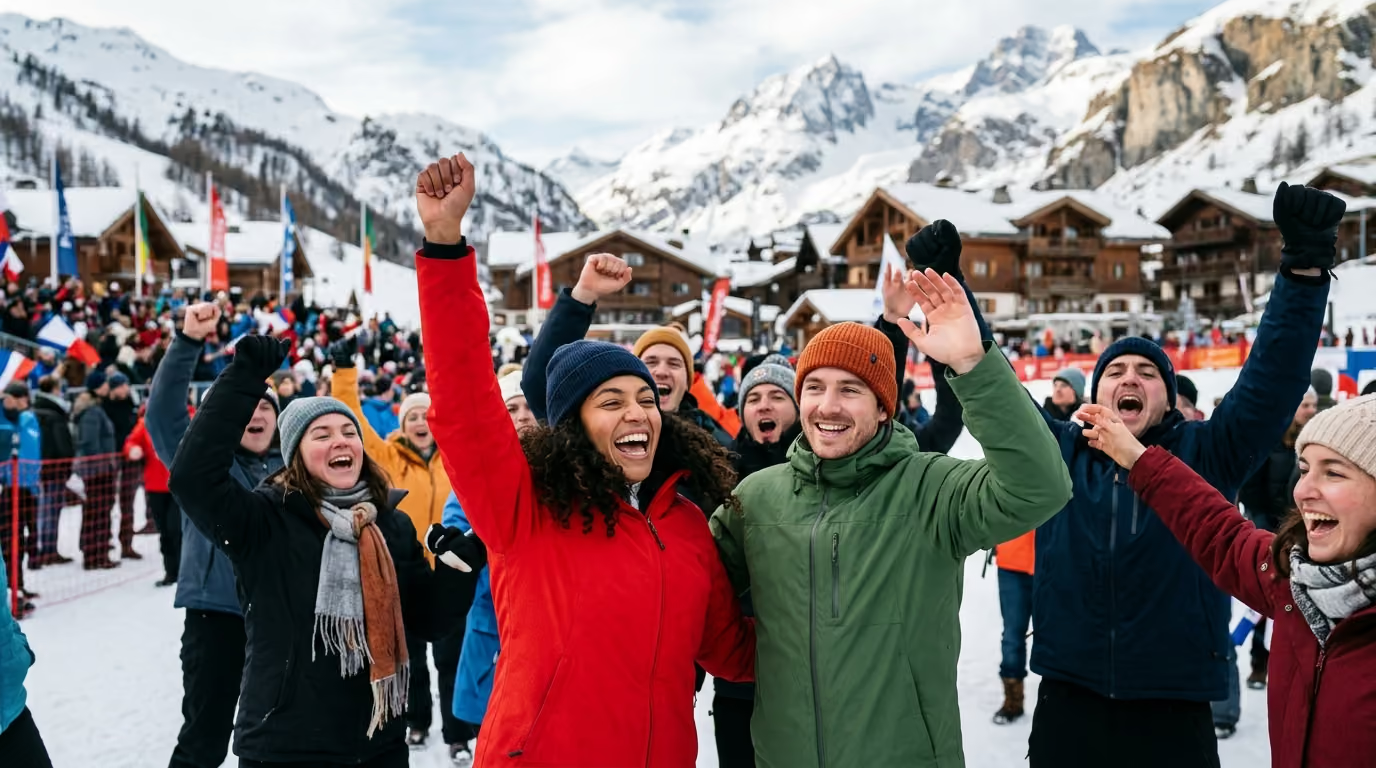
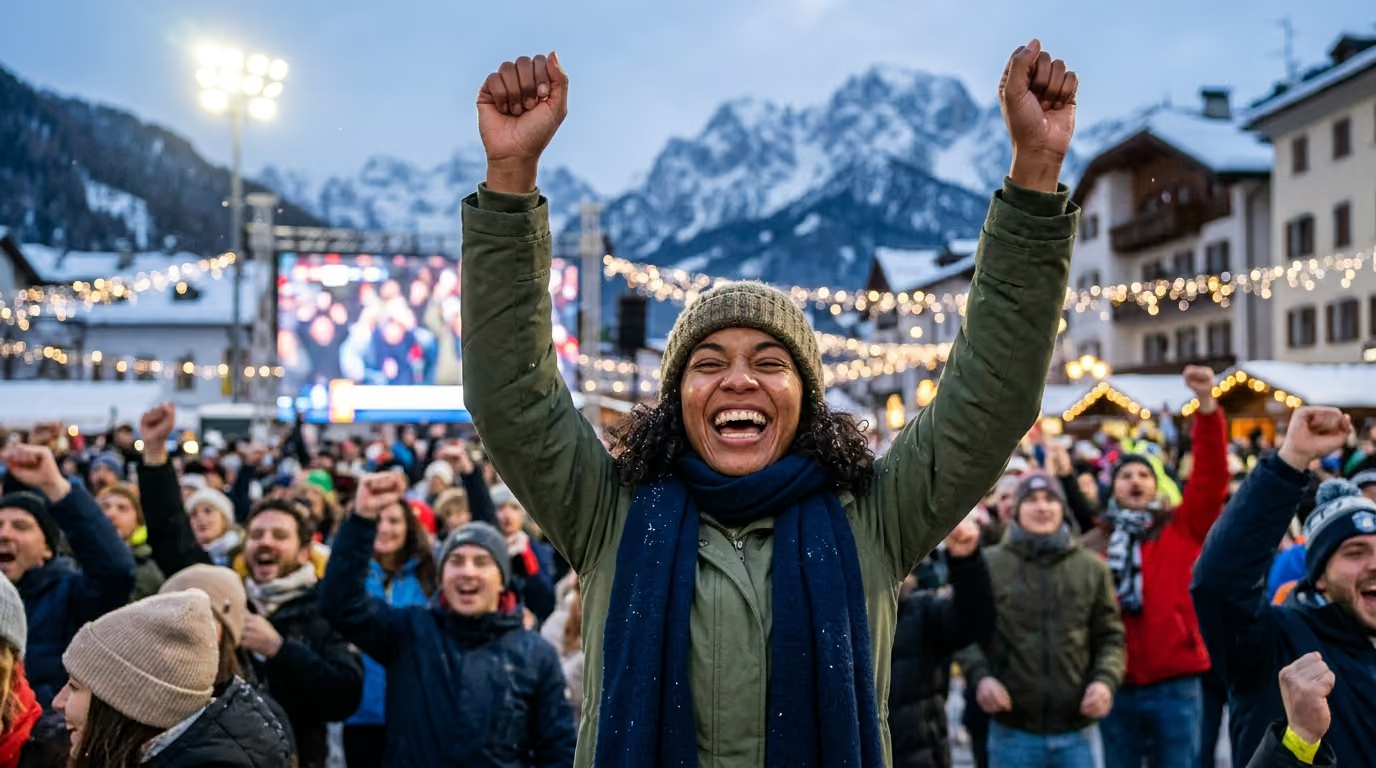
Most Olympic hosts give you a compact footprint. The French Alps 2030 does the opposite. Events sit across Auvergne-Rhône-Alpes and Provence-Alpes-Côte d'Azur, with hubs around Nice on the Riviera, Briançon and Montgenèvre near the Italian border, and the Albertville, Courchevel and Méribel cluster that hosted the 1992 Games. A crowd in Nice on a mild afternoon is a different crowd from one in a snow-lit resort square two hours' drive north.
The organisers have committed to using existing resort venues rather than building new ones, so the Games are spread by design and sustainability-conscious in the same move. For a sponsor that is a planning fact worth respecting: your fan zones and sponsor houses will be distributed across towns, and whatever you run has to hold up identically in each one.
The activation: a podium-styled collectible made on site
Here is what the booth does. A guest steps up, has their photo taken, and in under two minutes walks away with a one-of-one collectible that places them in winter-sport styling: on a podium, in bib and medal, framed in the livery of the event. Sponsor logos render at print quality and stay brand-safe, so a partner's mark sits cleanly on the card rather than looking bolted on. The guest keeps a printed piece in a display case, a digital file to share, or both.
The styling is where this earns its place at a Winter Games. A generic booth gives you a photo. A card that puts the guest on the medal step, in the colours of the event, reads as a keepsake from that specific fortnight in the Alps. For a comparable build, Lenovo's FIFA-partner activation in London in June 2025 produced 800+ personalised cards printed and delivered in four hours, each in a hardcover display case across three themes. The same engine handles a podium card as readily as a football one.
Delivering the same output across every resort
Spread is the real test here. A sponsor house in Courchevel and a fan zone in Nice have to hand guests the same quality of card, on the same turnaround, with the same logo treatment. That is a delivery problem before it is a creative one. Staffed kiosks with on-site printing suit the sponsor houses, where crew manage the queue and the display cases. A QR and BYOD flow suits the busier open fan zones, where guests use their own phones and receive the digital card without a printer bottleneck. Most multi-site programmes end up running both.
Privacy travels with it. Guest photos are processed to make the card and then deleted after the event, which is the answer a brand's legal and data teams will want before they sign off on a booth that photographs the public across a fortnight.
The French Alps 2030 Winter Olympics card runs on the same setup we build for every activation. See how the format works in our definitive guide to AI photo booths, and how a fan-card activation plays out in our AI trading card work and at the IndyCar Grand Prix.
Frequently asked questions
How long does each guest take?
The AI image generates in about 30 seconds, and the full photo-to-printed-card workflow runs end to end in around a minute 45, all on-site.
Can the cards match our sponsor branding?
Yes. Your logo is placed to a brand-approved brief at print quality, on the card and on the share-ready file, never left to a phone filter.
Will it keep up with a big-event crowd?
Staffed booths are built for throughput, and a mobile route lets fans use their own phone when the queue outgrows the printer, so it scales from a hospitality suite to a concourse.
What happens to guests’ photos?
They are processed to generate the card and then deleted after the event, with no lingering face database.
Planning your own activation? See our AI photo booth and AI trading cards.
Why the long runway is the opportunity
Four years is unusual, and it favours whoever moves first. Locking the concept and the supplier early means you can pilot the card design at a smaller event in 2027 or 2028, learn what guests actually queue for, and arrive in 2030 with a format that is already proven rather than a first attempt. It also means the strong locations and dates get claimed before the field crowds in closer to the Games.
If you are scoping a presence at the French Alps 2030 Winter Olympics, the useful next move is to fix the collectible concept and the delivery plan now, while there is time to test it. Get in touch and we will map the booth format to your venues and the number of guests you expect to reach.


Primatix creates highly engaging AI-powered photo & video experiences. Increase your event engagement and brand awareness with shareable, user-generated content that gets people talking!